
Botanical Wellness
The Big Deal About Rhodiola
Feb
Why this Arctic root is having a moment — and why it deserves one.
In a world that runs on overstimulation, burnout, and adrenal fatigue, Rhodiola feels like a wise, steady companion rather than a quick fix. Known botanically as Rhodiola rosea, this powerful adaptogen has been used for centuries in cold, mountainous regions to support resilience, stamina, and clarity under stress.
But what actually makes it such a big deal?
A True Adaptogen
Rhodiola rosea grows in harsh, high-altitude climates across parts of Europe and Asia. Plants that survive extreme environments often develop potent protective compounds — and Rhodiola is no exception.
As an adaptogen, Rhodiola helps the body adapt to stress rather than override it. It doesn’t sedate. It doesn’t overstimulate. Instead, it works with your nervous system to support balance.
Steady energy instead of caffeine spikes.
Mental clarity without jitters.
Resilience without burnout.
Why People Love It
1. Stress Support
Rhodiola is best known for supporting the body’s response to physical and emotional stress. It’s often used during demanding seasons of life — launching something new, caregiving, travel, or high-output creative work.
2. Clean Energy + Focus
Unlike stimulants, Rhodiola tends to feel smooth and grounded. Many people describe it as “calm alertness.” It can support concentration, stamina, and cognitive performance without the crash.
3. Mood + Motivation
Traditionally used to uplift the spirit, Rhodiola may support a sense of optimism and forward momentum — especially when stress has been weighing heavily.
4. Physical Endurance
Historically used by soldiers and athletes in Russia and Scandinavia, Rhodiola has long been valued for supporting physical stamina and recovery.
The Fire Horse Connection
This year carries the dynamic, passionate, forward-moving energy of the Fire Horse — bold, visionary, and action-oriented. But fire needs grounding. It needs a steady container.
Rhodiola embodies that balance beautifully:
– Energy without chaos
– Strength without strain
– Power without depletion
It’s the kind of plant ally that supports sustainable momentum.
How We Love to Use It
At Kaya Holistic, we work with Rhodiola in two primary ways:
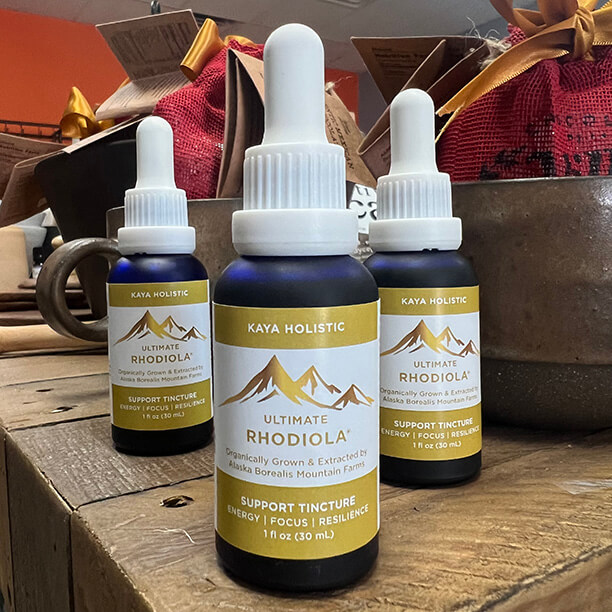
Our Rhodiola Tincture
A concentrated extract for those who want quick, efficient daily support. Perfect in the morning or early afternoon when you need grounded focus.
Our Fire Horse Tea & Rhodiola Tincture Pairing
A synergistic blend designed to balance vitality with heart-centered presence. This bundle offers the ritual of tea alongside the potency of tincture — ideal for those wanting both ritual and function.
How to Work With Rhodiola
- Best taken earlier in the day (it can be energizing).
- Start low and increase slowly.
- Cycle if using long-term (for example: 5 days on, 2 days off).
- Always consult your healthcare provider if pregnant, nursing, or on medication.
Is Rhodiola for You?
You might benefit from Rhodiola if you’re experiencing:
- Burnout or adrenal fatigue
- Brain fog
- High stress seasons
- Low motivation
- Energy crashes
It’s especially supportive for those who want strength that feels steady rather than wired.
Final Thoughts
Rhodiola isn’t flashy. It’s not trendy because it’s new. It’s powerful because it has endured — just like the climates it grows in.
It reminds us that true resilience is rhythmic, rooted, and sustainable.
And that’s the real big deal.
Clinical Research on Rhodiola
While Rhodiola has been celebrated for centuries in traditional herbal medicine, modern research is beginning to validate many of its benefits:
Menopause Support
Studies suggest Rhodiola may help reduce fatigue, improve mood, and support cognitive clarity during menopause. In combination with other herbs like black cohosh, it has shown potential for easing emotional and psychological symptoms.
Fatigue & Energy
Clinical trials show Rhodiola can improve symptoms of chronic fatigue and enhance mental clarity and stamina. Early research also suggests it may be helpful for post-viral fatigue, including long COVID, though studies are still emerging.
Immune & Stress-Related Support
Preclinical studies indicate that Rhodiola may modulate immune responses and inflammatory pathways, pointing to potential benefits for stress-related autoimmune or inflammatory conditions. While human trials for lupus are not yet available, these findings highlight intriguing possibilities.
- Immune modulation in autoimmune models
- Anti-inflammatory effects in arthritis studies
These studies show that Rhodiola is more than a traditional tonic—it has real, clinically observed effects on fatigue, stress, and cognitive resilience.
